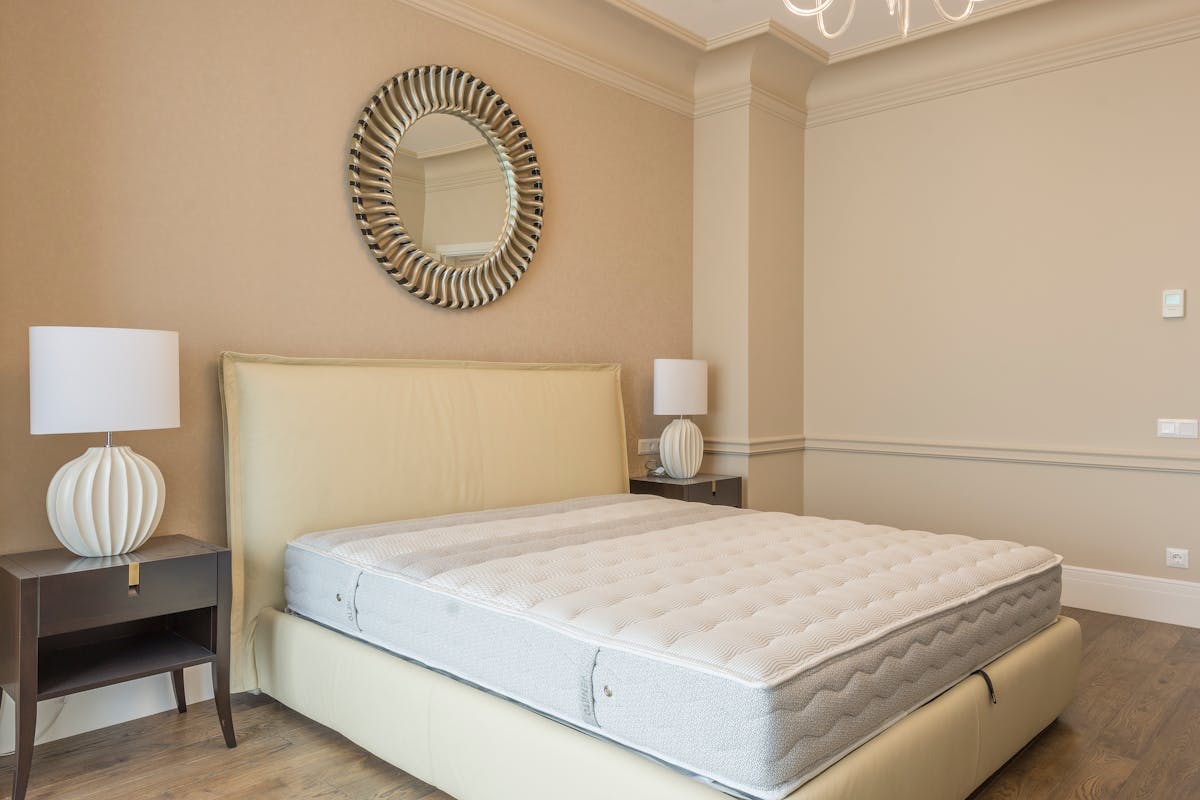
Bed bugs don't need a dirty apartment or an old building to take hold — they need people moving through a space, and Flushing has more of that than almost anywhere else in Queens. New immigrants and secondary migrants cycle through short-term rental situations here at a pace that outstrips most neighbourhoods, and a furnished room above a Main Street storefront rented to three or four unrelated adults is a common setup we see. One person's luggage, a secondhand mattress, or a short stay is often all it takes.
That same turnover means a single introduction rarely stays contained. In a converted one-bedroom split between several tenants, bugs move between sleeping areas fast, and in the older multi-family buildings that make up much of Flushing's housing stock, they spread building to building through shared walls and risers just as easily as they do in any dense NYC apartment block.
We map every harbourage point — mattress seams, headboard cracks, baseboard gaps, outlet covers — before deciding on treatment, because guessing at scope in a shared or subdivided unit is how infestations get missed and come straight back.
Bed bugs in a Flushing rental: what NYC law requires and what treatment actually takes
Local Law 69 of 2017 requires all multiple dwelling property owners to attempt to obtain the bed bug infestation history from the tenant or unit owner, including whether eradication measures were employed. Owners file annually between December 1 and December 31, for the previous year running November 1 through October 31 — a documented professional treatment is exactly what a landlord needs on file to make that filing, which matters in Flushing's high-turnover multi-family buildings. (NYC HPD — Bed Bugs)
A property owner must either provide the bedbug annual report filing receipt to each tenant — on a new lease and with each renewal — or post it in a prominent location in the building, and must either distribute or post the DOHMH "Stop Bedbugs Safely" guide. New York State law separately requires owners to disclose bedbug infestation history dating back one year to new tenants. In a subdivided or furnished-room rental, that paper trail is a tenant right, not a courtesy. (NYC HPD — Bed Bugs)
NYC Health states that tenants in New York City have the right to a bedbug-free environment, that bedbugs are named in the list of insects building owners are legally required to eradicate, and that New York City lists bedbugs as a Class B violation — hazardous, with 30 days for the landlord to correct it, get rid of the infestation, and keep the affected units from becoming infested again. (NYC Health (DOHMH) — Bedbugs: Information for Tenants and Building Owners)
The US EPA notes bed bugs (Cimex lectularius) hitchhike rather than fly or jump, and readily travel 5 to 20 feet from a harborage to a host — in a Flushing building where several unrelated adults may share a converted apartment, that range is enough to move an infestation between sleeping areas or into an adjoining unit within days. (US EPA — How to Find Bed Bugs)
Per the EPA, bed bug eggs resist many chemical and non-chemical control methods and the insects reproduce quickly, so very few real-world infestations clear after a single visit — an integrated pest management approach with resident cooperation and a scheduled follow-up is what the agency recommends, not a one-and-done spray. (US EPA — Controlling Bed Bugs Using IPM)
Heat vs conventional insecticide for a Flushing apartment bed-bug job
| Factor | Whole-room heat treatment | Conventional / chemical treatment |
|---|---|---|
| Effect on eggs and all life stages | Lethal to bed bugs and eggs — UMN Extension records mortality within 90 minutes at 118°F (48°C) and instantly at 122°F (50°C) | Eggs resist many chemical and non-chemical methods, so survivors can hatch after treatment (EPA) |
| Visits typically needed | Can knock out every life stage in one heated session if the room holds target temperature throughout | Very few infestations clear after one treatment; multiple visits are the norm (EPA) |
| Best fit for Flushing's furnished-room turnover | Faster full clearance before a new tenant moves into a subdivided unit | Works well for a single, early-caught room; slower against a fast-turnover, multi-tenant unit |
| What both still require | Resident prep and post-treatment monitoring for survivors | Resident prep, IPM follow-through, and diligent monitoring (EPA) |
How much does bed bug treatment cost in NYC?
$300–$4,000
Per room (chemical): $300–$600. Per whole apartment (heat): $1,500–$4,000. National per-job average: $145–$500 (Bob Vila) to $1,000–$4,000 whole-home (aggregator synthesis).
| Chemical treatment | $300–$600 per room |
| Heat treatment | $1,500–$4,000 per apartment |
Market range — not our quote
This is a market range synthesised from published cost guides — not a quote from this provider. The actual price depends on an in-person or photo-based inspection.
The NYC per-room/heat figures come only from tier-2 NYC pest-industry blogs; the national anchor (Bob Vila $145–$500) is markedly lower, suggesting NYC-specific multi-visit chemical or heat jobs are being compared against a simpler national per-visit figure. Wide spread — verify against a real local quote before treating as a firm number.
What drives the price
- Chemical (multi-visit, cheaper per visit) vs heat (single visit, higher upfront)
- Apartment size / room count
- Severity and spread of infestation
- K9 inspection add-on for post-treatment clearance
Signs you have a bed bug control problem
- Itchy bites in a line or cluster after sleeping, especially in a shared or recently-turned-over rental
- Rust-coloured spots on sheets, mattress seams, or the headboard
- Live bugs in mattress seams, box spring joints, or behind furniture near a bed
- Small pale eggs or shed skins in furniture crevices or along baseboards
- A recent move, new roommate, or furnished-room turnover before symptoms started
Why Flushing sees this
Flushing's residential turnover rate is one of the highest in Queens, and furnished-room subdivisions above Main Street are a recurring bed bug introduction vector we see repeatedly in this neighbourhood.
In the mix of older multi-family buildings and newer developments that make up Flushing's housing stock, an untreated adjacent unit can reinfest a treated apartment within weeks — a building-wide conversation is often necessary, not just a single-unit treatment.
NYC's Bed Bug Disclosure Law (Local Law 69 / Admin Code §27-2018.1) requires landlords to disclose a unit's and its neighbours' prior-year bed bug history at lease signing — our documented treatment record is what satisfies that requirement.